Generalife Gardens: Visiting the Alhambra Grounds
Granada gets baking hot by midday. Step through the cypress archways into the generalife gardens, though, and the air cools by four or five degrees. The sound of trickling water takes over from the hum of tour groups down by the ticket barriers. Moorish sultans built this place on the slopes of the Cerro del Sol as a private country estate, a deliberate refuge uphill from the main fortress where rulers could escape the suffocating politics of court life.
Most travelers rush straight toward the palace chambers with one eye glued to their watch. That is a mistake. The surrounding alhambra palace and gardens deserve unhurried hours on their own, especially if you enjoy fragrant myrtle hedges, long terrace views over the Albaicín quarter, and stone irrigation channels that have functioned without interruption since the early 1300s. Walking these terraces requires a bit of planning, a pair of flat shoes, and a willingness to slow your pace down to a crawl.
Book your nasrid palaces experience:
What Are the Generalife Gardens and Palacio Generalife?
The name comes from the Arabic Jannat al-Arif, which most translators render as the Architect's Garden. Others claim it means the Garden of the Overseer. Scholars still debate the exact phrasing, but the purpose of the estate was never mysterious. Built around the turn of the fourteenth century, the palacio generalife served as an orchard farm, hunting lodge, and summer villa. Ismail I remodeled significant parts of the complex around 1319, adding decorative plasterwork and adjusting the terraces so royal family members could look out over the river canyon below.
Everything here feels distinct from the militarized red towers across the ravine. The fortress was designed to intimidate, defend, and impress visiting diplomats. The palacio generalife, by comparison, was meant for kicking off slippers, eating fresh figs, and napping during the blistering Andalusian afternoons. The rooms are deliberately compact. Whitewashed walls reflect the bright sun, while open-arched porticos catch mountain breezes descending from the Sierra Nevada peaks.
Water is the spine of the entire estate. Moorish hydraulic engineers diverted the Darro River miles upstream, engineering the Acequia Real (Royal Canal) along the contours of the hill to feed the orchards, cisterns, and royal fountains. If you enjoy understanding how medieval engineering shaped Moorish Spain, learning about the wider history of the Nasrid Palaces and the Alhambra helps put these remarkable water systems into perspective. Without that canal, the gardens would have been nothing more than dry scrub on a sun-scorched hill.
Key Areas of the Alhambra Palace Gardens
You begin your walk through the Lower Gardens (Jardines Bajos). These manicured grounds feel ancient, but Spanish architect Leopoldo Torres Balbás actually designed them in the 1930s. He replaced neglected vegetable patches with modern, Mediterranean-style garden rooms framed by tall, geometric cypress hedges. Roses, lavender, and pomegranate trees bloom beside shallow rectangular reflecting pools. An open-air theatre sits at the southern end, where the city stages international dance and music performances during the hot July nights.
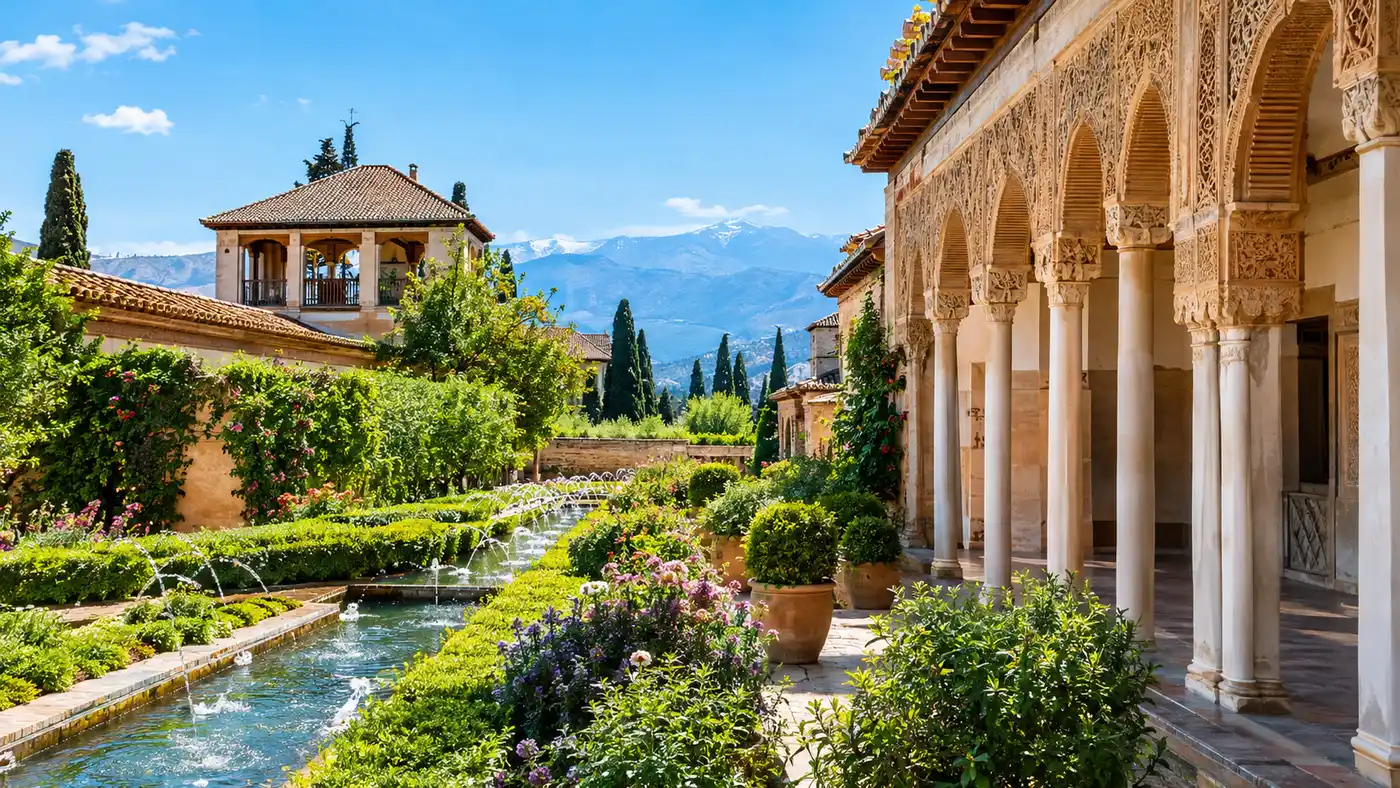
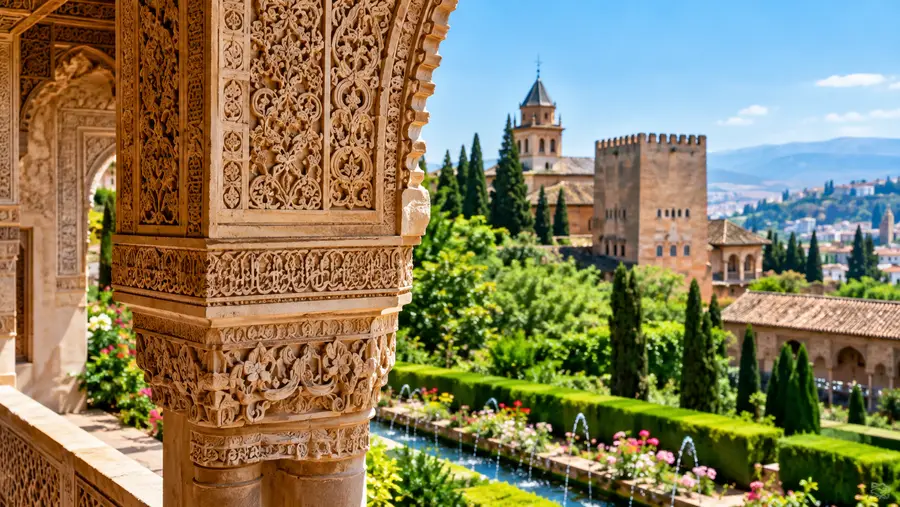
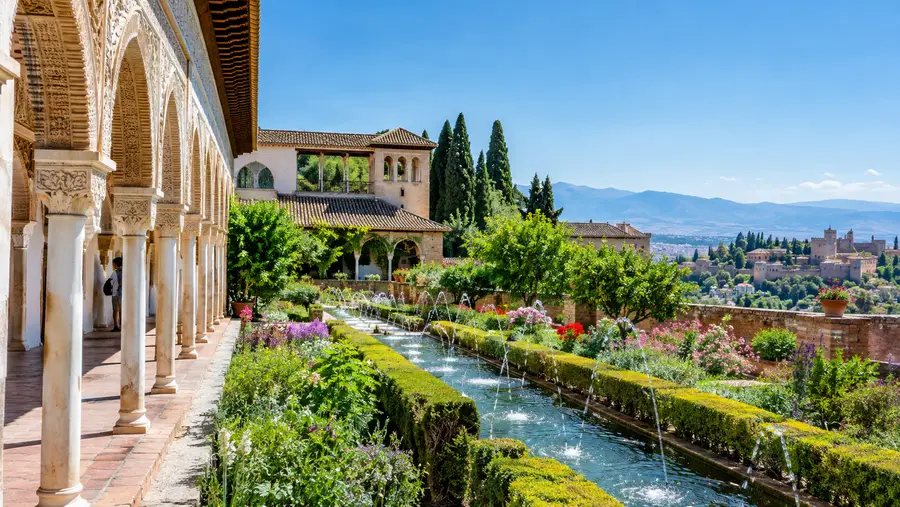
Passing through the defensive gates brings you into the Patio de la Acequia. This is the visual postcard of the alhambra gardens. The courtyard is long and narrow, split down the middle by a 48-meter water channel flanked by dozens of arched water jets that cross in mid-air. Those curved fountains were added during Christian restorations in the nineteenth century, yet they fit the space so naturally that almost nobody cares about the historical inaccuracy. Myrtle, white oleander, and climbing roses crowd the perimeter. Through the stone portico windows along the west wall, you get magnificent views across the valley toward the whitewashed houses of Sacromonte.
Walk through the northern pavilion and you enter the Patio de la Sultana, sometimes called the Court of the Cypress. Thick boxwood hedges form a maze-like garden around a U-shaped pool fed by stone fountains. Legend has it that Boabdil's wife met her lover, an Abencerrages knight, beneath the ancient cypress tree whose dried trunk still stands anchored against the wall. The sultan reportedly had the knight and thirty-five family members executed after finding out. True or not, the courtyard has a dark, enclosed feel that contrasts with the sunny canal patio next door.
Pro tip: Take your time on the Escalera de Agua (Water Stairway). Cup your hands over the inverted hollow tiles forming the banisters, where cold water from the mountain canal flows continuously right under your palms.
That stone stairway leads to the highest point of the generalife gardens spain. Shaded beneath an enormous canopy of English elms and bay laurels, the path climbs past stone rest platforms toward the modern upper gardens. It feels untamed up here. Birdsong carries through the trees, moss coats the stone walls, and you can smell pine needles warming in the sun.
Tickets and Access: Seeing the Alhambra Gardens Granada
Scoring entry to the Alhambra can feel impossible during peak season. Main tickets often sell out months ahead, leaving many travelers scrambling. Fortunately, the gardens-only ticket is easier to secure and significantly cheaper. Officially named "Gardens, Generalife and Alcazaba", this pass includes full access to every outdoor space on the hill, plus the fortress towers, without granting entry to the Nasrid Palaces.
For visitors who could not book a palace slot, or those who dislike strict entry timetables, visiting the Alhambra without the Nasrid Palaces is a sensible alternative. You skip the stressful 30-minute palace entry deadline entirely. You can wander la alhambra gardens at your own pace, climb the Torre de la Vela for views of Granada, and explore the Generalife summer villa without being herded through rooms by security guards.
| Ticket Type | Approximate Cost | Generalife Gardens | Alcazaba Fortress | Nasrid Palaces | Timed Window |
|---|---|---|---|---|---|
| Alhambra General | €19.09 | Full Access | Full Access | Included | Strict palace time |
| Gardens, Generalife & Alcazaba | €10.61 | Full Access | Full Access | No Entry | Morning or afternoon slot |
| Generalife & Gardens Night Visit | €7.42 | Illuminated grounds | No Entry | No Entry | Evening slot only |
Ticket checks are strict throughout the grounds. You will scan your ticket QR code or passport at the Generalife entrance turnstile, then again when entering the Alcazaba fortress across the ravine. Always keep your identification with you in your pocket or daypack. Photo IDs must match the full name printed on the pass, and gate staff will turn you away if details do not match.
Book your nasrid palaces experience:
Best Times to Walk the Alhambra Gardens Spain
Granada summers are punishing. July and August bring temperatures well above 35 degrees Celsius, and the dry heat reflects off the bare flagstones. Walking around midday leaves you drained, parched, and irritable. Scheduling your visit around the light and weather transforms the experience entirely.
Note: Morning ticket holders must cross through the access barriers before 2:00 PM, but you are free to remain inside exploring the grounds until the site closes for the afternoon.
Spring is the best time for plant enthusiasts. Roses start flowering in late April, reaching their peak around mid-May when the heavy scent of jasmine hangs in the air. Autumn offers a completely different palette. In late October, persimmon trees droop with heavy orange fruit, pomegranate bushes turn amber, and the elms canopying the hill drop thousands of golden leaves onto the stone paths.
- First slot of the morning (8:30 AM): Light pours horizontally across the cypress trees, staff are still sweeping gravel walkways, and you will hear fountain trickles instead of tour guide microphones.
- Golden hour before sunset: The stone towers glow red, long shadows stretch across the Darro canyon, and the midday heat finally breaks into a pleasant mountain chill.
- Late winter mornings (January and February): The deciduous trees stand stark and bare, but bright Seville oranges hang from the courtyard trees, with snowy Sierra Nevada peaks framing every southward view.
Practical Tips for Walking the Generalife Grounds
The Alhambra grounds are deceptively large. A leisurely walk from the main entrance pavilion through the Generalife terraces, down through the Partal gardens, and up into the Alcazaba spans roughly three kilometers. Most pathways feature centuries-old stone mosaics called empedrado granadino, crafted from smooth, rounded river pebbles set into mortar.
These pebble walkways look charming, but they play havoc with your ankles. Thin-soled shoes or slip-on sandals will leave your feet aching within forty minutes. Wear sturdy walking shoes with decent rubber traction, especially near fountains where splashing water makes polished stone tiles slick.
- Water fountains: Do not buy overpriced plastic bottles at the cafe kiosks. Carry an empty metal flask and refill it at the free, mountain-fed stone spouts found near the Generalife exit and the Plaza de los Aljibes.
- Managing the terrain: The upper terraces include steep stairways and cobbled ramps. Visitors using strollers or mobility devices should follow the marked accessible path running through the lower garden spine.
- Crowd timing: Large tour groups generally hit the Generalife around 10:30 AM after clearing the fortress gates. Arriving at gate opening gives you roughly ninety quiet minutes before the narrow canal paths jam with tour groups.
- Baggage rules: Large backpacks and tripods are barred at the gates. Free lockers are located beside the main ticket pavilion, operable with a one-euro coin that you get back upon return.
Frequently Asked Questions about generalife gardens
Are the Generalife gardens included in the standard Alhambra ticket?
Yes. The standard Alhambra General pass gives you complete access to the Generalife summer villa, the lower and upper terraces, the Alcazaba fortress, and the Nasrid Palaces. You only need the dedicated gardens ticket if standard palace passes are sold out or if you specifically want to skip the palace interior.
How much time do you need to see the Generalife gardens?
Plan on spending at least 75 to 90 minutes inside the Generalife area alone. If you intend to take photos, sit by the fountains, and stroll the upper water staircase without rushing, give yourself two full hours before heading toward the Alcazaba.
Can you visit the Generalife gardens at night?
Yes, special night garden tickets are sold seasonally from spring through autumn. The fountains and main flower beds are illuminated with soft spotlights, creating an atmospheric, quiet walk, although access is restricted to the Lower Gardens and the Patio de la Acequia.
Quick Reference
- Entry included in standard Alhambra ticket or €10.61 gardens pass
- Best visited at 8:30 AM opening or late afternoon
- Expect 75 to 90 minutes for the Generalife sector
- Original 14th-century royal summer villa and irrigation network
- Uneven pebble pathways require sturdy walking shoes
Book your nasrid palaces experience:
My Take
Tourists often treat these grounds as an afterthought, an extra box to check once their palace time slot concludes. That does a real disservice to one of the most remarkable landscape designs in southern Europe. The sultans treated this hillside as their private sanctuary for good reason. Find an empty stone bench near the Court of the Sultana, listen to the river water churning through the channels, look out over the white roofs of the Albaicín, and let the quiet beauty of the estate settle in before you head back down into the city.
Read more about nasrid palaces.